A no contact order gets issued all the time in domestic violence cases all throughout West Michigan court rooms. These orders can also be issued for virtually any criminal charge. Courts almost invariably enter orders like this to people charged with crimes who are out on bond, after a conviction or sentencing a person convicted of a crime. These no contact order make it difficult for parents to work out parenting time or handle parenting issues. It makes it harder for couples or friends to work things out. Other types of crimes where a no contact order is issued are: stalking, sex crimes, harassment, assault, battery and trespassing. A no contact order for these types of crimes means the offender is not allowed to have any contact or attempt to contact the victim.
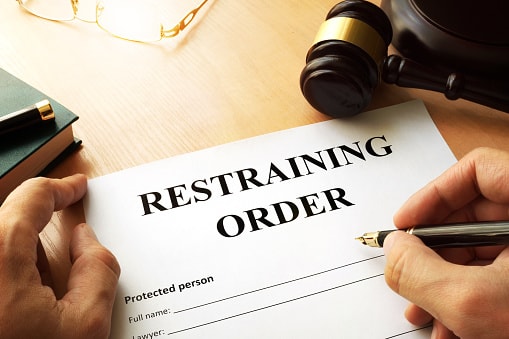
Unfortunately for those convicted of a crime and facing a no contact order, the word contact is broadly defined. The contact can be either indirect or direct contact. The contact can be through the use of a third party or communication by the offender. Contact also means the use of fax, cell phone, phone, and computer to make contact. Remember, any violation of a no contact order can result in defendant having their bond revoked and being sent off to jail.
How to Remove a No Contact Order
Under MCL 765.6b and MCR 6.106 gives courts in Michigan the authority to impose no contact orders. The authority to eliminate the no contact order also is found in the previously mentioned laws. The process to remove a no contact order starts when your lawyer files a motion. A motion is a formal request for a court to modify no contact orders. These motions can be made in writing or orally at an arraignment. No judge in any West Michigan courtroom will remove a no contact order without the alleged victim being present. In many cases, judges will require the victim to testify about why the no contact order should be removed. If the victim does not want the no contact order removed, judges will almost certainly grant the victim their request.
Over the years, it has gotten harder to get judges to remove no contact orders. In other cases, court clerks can often confuse the process when you call the court and ask them to set up a hearing on removing a no contact order. If this doesn’t give you a reason to want an experienced five-star rated criminal defense attorney on your side, then nothing will!
Are No Contact Orders And Protection Orders The Same Thing?
While they are remarkably similar, these orders are not the same thing even though the results of them are very similar. No contact orders are usually part of a bond condition. In these cases, there are formal charges and many of them are domestic violence charges.
A personal protection order is something that is granted at a completely separate court hearing. These orders are usually given when someone is stalking, threatening, or refusing to stop making contact with another person. Just like a no contact order, a personal protection order requires a person to make no contact with the alleged victim.
If you want your no contact order removed, please call Shawn today at 616-438-6719. The call is free. Will you be?
A No-Contact Order Is Not a PPO
These two get confused constantly, and the difference matters:
- A no-contact order is a bond condition in your criminal case. A judge imposes it at arraignment, it exists because you have been charged, and it disappears or changes when the criminal case does.
- A personal protection order is a separate civil order under MCL 600.2950 that the other person petitions for — often without you present. It can be entered whether or not you are ever charged with anything, and violating it is criminal contempt.
You can be subject to both at once, with different terms, in different courtrooms. Complying with one does not excuse violating the other.
What It Actually Prohibits
Assume everything is covered: in-person contact, calls, texts, email, social media, tagging, and messages passed through a friend, a relative, or a child. "I only asked my brother to tell her something" is a violation. So is liking a post, in front of the wrong judge.
Some orders go further and exclude you from a residence or workplace, which is how people find themselves locked out of a house they pay for, with their belongings inside.
The Trap: They Contact You
This is the single most common way I see a defensible case fall apart. The complaining witness — who very often did not want charges filed at all — calls, texts, or shows up. The client answers, because it seems absurd not to. The order binds you. Their willingness to talk is not a defense, and the prosecutor now has proof of contact.
What to do instead: do not respond, do not delete anything, screenshot it with the date visible, and send it to me. A documented pattern of the other person initiating contact is useful — it supports a motion to modify, and it is relevant to their credibility.
Getting the Order Changed
Judges will modify these conditions when there is a real reason. The ones that get traction:
- Children. Shared custody or parenting time that the order makes impossible.
- Housing. A shared lease or mortgage, or the need to retrieve belongings, tools, or work equipment.
- A shared business or employment at the same workplace.
- The complaining witness asks for it. Not decisive — the prosecutor still has a say — but it matters.
Often the realistic outcome is not removal but conversion to a "no assaultive or threatening contact" condition, or contact limited to a co-parenting app. That is usually enough to let life function while the case proceeds. Never arrange this informally with the other person. It has to come from the judge.
Retrieving Your Belongings
If you have been excluded from a residence, ask the court for a civil standby — a scheduled window, often with a police officer present, to collect specific items. Do not go over on your own because you "just need clothes." That is a violation and it can end with you in custody.
Where This Fits in Your Case
Bond conditions are set at arraignment, within 24 to 48 hours of arrest, which is why getting an attorney involved immediately changes outcomes — see how a Kent County DV case moves. For the charges themselves, see first-offense domestic violence and my full Grand Rapids domestic violence defense guide.
Frequently Asked Questions
What is a no-contact order in Michigan?
A no-contact order is a bond condition imposed by the criminal court at arraignment, not a separate lawsuit. It bars contact with the complaining witness — in person, by phone, by text, through social media, and through third parties such as friends or family. It lasts while the criminal case is pending unless the court modifies it.
What happens if the other person contacts me first?
You still cannot respond. The order binds you, not them. Replying to a message they sent is still a violation, and it is the most common way people damage otherwise defensible cases. Save the message, do not answer it, and give it to your attorney — a pattern of contact attempts by the complaining witness can support a motion to modify the condition.
What is the penalty for violating a no-contact order?
Your bond can be revoked and you can be held in jail for the remainder of the case. Depending on the conduct, a violation can also bring new charges. Practically, a violation is often more damaging than the underlying allegation, because it hands the prosecutor evidence of exactly the behavior they are alleging.
Can a no-contact order be changed?
Yes. The court that imposed it can modify it, and judges do — particularly where children, a shared home, or a shared business are involved. It usually requires a motion, and the prosecutor’s position and the complaining witness’s wishes both carry weight. It is one of the first things I address in a case where a client has been locked out of their own house.
Talk to Me Before You Talk to Anyone Else
I am Shawn Haff, and I defend domestic violence cases across Kent, Ottawa, Allegan, Barry, Ionia, Muskegon, Newaygo, and Van Buren counties. The call is free, I answer my own phone, and the earlier I am involved the more options you have. Call 616-438-6719 or send me a message.